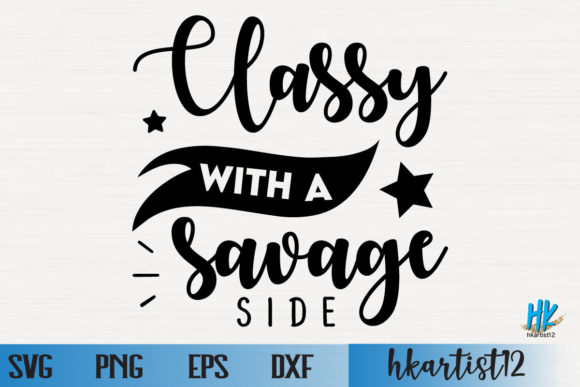
Classy with a Savage Side SVG Review
As a designer who has spent years navigating the fine line between boutique elegance and bold humor, I approach every new asset with a critical eye. The Classy with a Savage Side SVG immediately caught my attention for its promise of duality. In the world of custom apparel and handmade goods, that specific blend of sophistication and sarcasm is a goldmine for engagement. However, before I commit this design to a machine or sell it as a finished product, I need to understand how it translates from a digital file into a tangible, stitched reality.
The First Impression: Balancing Tone and Texture
When I first opened the Classy with a Savage Side SVG, the visual personality was striking. It doesn't just scream "funny"; it whispers it with an edge. For a craft business owner or an Etsy seller, this kind of mood is essential. It suggests a customer who appreciates wit but refuses to sacrifice style. The layout appears clean, which is crucial because embroidery thrives on clarity. If the lines are too tangled or the negative space too small, the final stitch count can become a nightmare of density and puckering.
This design feels like it belongs on items where the wearer wants to make a statement without shouting. Imagine a high-quality canvas tote bag for a busy professional or a premium cotton sweatshirt for a boutique shop. The contrast between the "classy" aesthetic and the "savage" text creates a narrative that customers love to share. But does the graphic hold up when converted from a vector cut file into a complex machine embroidery design? That is the question every serious maker must answer.
Real-World Application: From Digital File to Stitched Product
Let's talk about a specific scenario. I am planning to use the Classy with a Savage Side SVG for a limited run of embroidered patches intended for denim jackets and backpacks. Patches are forgiving in many ways, but they demand precision. Since the source file includes formats like SVG, EPS, and DXF, I have flexibility in how I manipulate the shape before digitizing. However, remember that an SVG is primarily a cut file, not a native embroidery file. You cannot simply load an SVG into your embroidery software and expect perfect results.
I would need to trace the paths carefully to create a dedicated embroidery file. The goal is to utilize a mix of satin stitch for the outlines and borders to give it that crisp, professional look, while using a dense fill stitch for any larger graphical elements. The text portion, likely the "savage" part of the design, requires special attention. Tiny lettering in embroidery often turns into illegible blobs if the stitch density is too high or the font size is too small. I would test the design at various scales to ensure the message remains readable after stitching.
For custom apparel like t-shirts or baby clothes, the placement matters immensely. A design with this much personality works best on the chest or back of a sweatshirt. On a baby item, the tone might need to be adjusted depending on the audience, but the "classy" aspect ensures it doesn't feel childish. For holiday gifts, this could be the perfect personalized touch on a kitchen towel or apron. The key is ensuring the fabric texture supports the design. A rough linen might hide some of the finer details, whereas a smooth twill will highlight the sharpness of the vectors.
Navigating Fabric Challenges and Hoop Limitations
Not every surface is created equal. When working with the Classy with a Savage Side SVG, you must be cautious with stretchy fabrics like jersey knit. Without the right stabilizer, the stitches can pull the fabric, distorting the elegant lines of the design. Similarly, dark fabrics require a different approach. While the digital preview might look great in black and white mockups, the physical thread colors need to pop against a navy or charcoal background. I always recommend testing the design on scrap fabric first, especially if you are planning to sell these as small shop products.
Curved surfaces like caps present another challenge. The design needs to be adaptable. If the original layout is wide, it might not fit well on a standard cap front without significant distortion. In such cases, breaking the design into smaller components or reorienting the text might be necessary. Also, consider the frequency of washing. Items like tea towels or aprons go through the wash often. High-density stitch areas can stiffen over time, affecting the drape and comfort of the garment. A balanced stitch density is vital for longevity.
Commercial Viability and Brand Consistency
For the Etsy seller or creative entrepreneur, this design offers strong potential for brand building. The Graphics category in Crafts is saturated, but designs that offer a unique voice stand out. The Classy with a Savage Side SVG provides that unique voice. It signals to the buyer that your shop understands modern humor and quality aesthetics. This increases buyer engagement and trust. Customers want to buy from makers who care about the details, from the thread choice to the final presentation.
However, you must verify the licensing terms before selling finished items. Just because you downloaded a zipped folder with JPG and PNG formats doesn't automatically grant commercial rights for embroidery. Always check the license agreement included with the purchase. If the license allows for commercial use, you can confidently list these as personalized gifts or handmade products. If you plan to resell the digital files themselves, that is a different matter entirely and usually requires a separate resale license.
Practical Designer Notes for Success
To get the most out of this project, follow these practical steps:
- Test on Scrap Fabric: Never skip the test run. Check how the thread colors interact with your chosen fabric.
- Review Stitch Density: Ensure the fill isn't so tight that it causes puckering, especially on thinner materials.
- Confirm Hoop Size: Make sure the entire design fits comfortably within your hoop without stretching the edges.
- Inspect Small Details: Zoom in on the digital file to see if any tiny elements will disappear once stitched.
- Use Proper Stabilizer: Invest in good tear-away or cut-away stabilizers to support the weight of the threads.
- Create Mockups: Use both light and dark fabric backgrounds in your printable mockups to show versatility to customers.
- Check Licensing: Confirm you have the right to sell finished embroidered goods made with this design.
In conclusion, the Classy with a Savage Side SVG is more than just a funny cut file; it is a versatile asset for the thoughtful designer. With careful digitization, proper material selection, and a keen eye for detail, it can transform simple garments into standout pieces. Whether you are creating a one-off holiday gift or launching a new line of commercial embroidery merchandise, this design has the potential to elevate your work. Just remember, the magic happens not in the download, but in the execution.