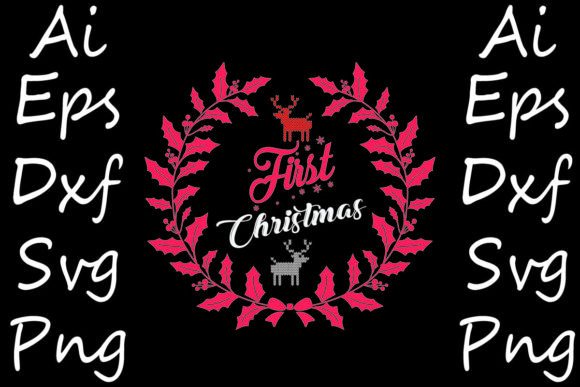
First Christmas: A Designer's Real-World Embroidery Review
As someone who has spent years navigating the delicate balance between digital aesthetics and physical stitching, I approach every new machine embroidery design with a critical eye. The market is flooded with generic holiday graphics, but finding a piece that translates well from screen to fabric is a different story. Today, I am evaluating the First Christmas design, specifically looking at its potential for real-world application in custom apparel, handmade gifts, and small business merchandise. This isn't just about how it looks on a mockup; it is about how it behaves when your machine starts moving.
The Visual Impact of First Christmas
At first glance, the First Christmas graphic presents a classic, heartwarming aesthetic that immediately resonates with the holiday season. As a Graphics asset intended for Crafts, the layout feels balanced, avoiding the common pitfall of overcrowding text and imagery. The typography appears clean, which is crucial because legibility often suffers when converted into satin stitch or dense fill stitch. For an Etsy seller or boutique owner, this visual clarity is the foundation of customer trust. When a client sees a preview, they need to instantly recognize the sentiment without squinting at tiny details.
However, the true test lies in the translation. I imagine placing this design on a soft, cream-colored baby onesie or a heavyweight sweatshirt. The mood created by First Christmas is gentle and nostalgic, making it an ideal candidate for personalized gift items. It does not scream for attention like a bold commercial logo; instead, it invites a closer look, perfect for heirloom-quality pieces. If you are planning a line of holiday embroidery products, this design fits seamlessly into a collection focused on family milestones and cozy winter vibes.
Real-Life Application: From Digital File to Stitched Reality
Let’s talk about a specific scenario. Picture yourself preparing a custom embroidered tote bag for a craft fair. You have selected a sturdy canvas material, known for its ability to hold structure. Uploading the embroidery file for First Christmas, you notice the vector lines are smooth. This is promising. In my experience, jagged lines in the digital source often result in messy running stitch outlines that can snag on textured fabrics.
Now, consider a more challenging application: a custom apparel project involving a dark navy sweatshirt. Here, the thread colors become critical. If the design relies heavily on white or light pastels against a dark background, you must ensure the stitch density is high enough to provide full coverage without creating a stiff, plastic-like patch on the fabric. The First Christmas design seems versatile enough for this, provided you adjust the underlay settings in your digitizing software. For a small shop product, consistency is key. If the design holds up well on both light and dark fabrics, it doubles your inventory potential without requiring multiple design variations.
I also envision using this as an embroidered patch sewn onto denim jackets or backpacks. The distinct shape of the text and any accompanying icons should allow for a clean cutaway if you are producing patches in bulk. This versatility makes First Christmas a valuable asset for a craft business looking to diversify their catalog beyond simple t-shirts.
Navigating Technical Challenges and Fabric Constraints
While the design shows promise, experienced designers know that no digital embroidery file is universally perfect. There are specific situations where First Christmas requires careful handling. For instance, if you attempt to use this on a thin, stretchy knit fabric like a jersey tee, the risk of puckering increases significantly. The tension required to push the needle through dense areas might distort the garment. In such cases, using a heavy-duty stabilizer is non-negotiable. Always test the design on scrap fabric first to gauge how the hoop size interacts with the stretch of the material.
Another area of concern is the scale. If you plan to shrink this design down for a cap or a small pillow cover, check the smallest lettering. Tiny text often becomes illegible once stitched due to thread thickness. If the hoop size forces you to reduce the design too much, the intricate details of First Christmas may blur together. Similarly, on highly textured fabrics like fleece or bouclé, the needle may struggle to penetrate evenly, leading to skipped stitches or uneven fill stitch patterns. These are practical realities that every apparel decorator must account for before committing to a production run.
Enhancing Product Value and Professionalism
Ultimately, the goal of using a design like First Christmas is to elevate the perceived value of your finished product. A well-executed handmade product commands a higher price point because of the care and precision involved. When customers receive a personalized item, they are not just buying a shirt; they are buying a memory. The quality of the embroidery directly impacts their satisfaction. If the stitching is clean, the colors pop, and the design sits flat on the fabric, you build brand consistency and buyer engagement.
For those selling digital assets, the presentation matters just as much. Creating high-quality printable mockups that show the design on various textures helps potential buyers visualize the end result. However, be transparent about what they are getting. Remember, this purchase includes a digital download only in formats like SVG, PNG, EPS, and JPG. It is essential to clarify that there is no physical product included. Your customers need to understand that the success of the project depends on their own equipment and skills, just as it does for us professionals.
Practical Notes for Designers and Makers
Before you finalize your next order or listing, take these steps to ensure success with First Christmas:
- Test on Scrap Fabric: Never skip the test run. Check for puckering, thread breaks, and color registration.
- Review Stitch Density: Ensure the fill is tight enough to cover the background but loose enough to remain flexible.
- Confirm Hoop Size: Verify that the design fits comfortably within your machine's working area without needing excessive trimming.
- Inspect Small Details: Zoom in on the digital file to see if any fine lines will disappear during stitching.
- Check Licensing: Before selling finished items or reselling the file, confirm the terms of use. Does the license allow for commercial embroidery? Can you sell the physical goods?
- Compare Backgrounds: Test the design in black and white mockups to see how it contrasts against different fabric tones.
By approaching First Christmas with this level of scrutiny, you transform a simple design asset into a reliable tool for your creative enterprise. Whether you are making a one-off baby embroidery gift or stocking shelves for the holiday rush, understanding the mechanics behind the art ensures your work stands out in a crowded marketplace. This design has the potential to be a staple in your portfolio, provided you respect the technical nuances of the medium.