Not Made for Winter: A Designer's Review
As a designer who has spent years navigating the delicate balance between digital files and physical thread, I approach every new asset with a critical eye. The phrase Not Made for Winter immediately sparks curiosity. It suggests resilience, warmth, or perhaps a playful defiance of the cold season. When evaluating this specific design for real-world application, the first thing I look for is how that sentiment translates from a screen into a tangible handmade product. Does it hold up under the scrutiny of a commercial embroidery machine? Is it robust enough for a small shop owner to build a brand around?
The First Impression: Mood and Visual Weight
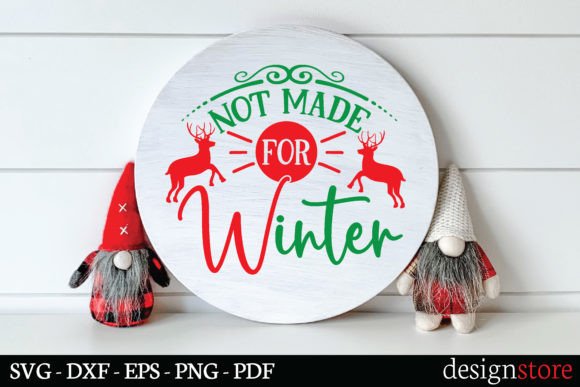
Upon opening the preview files, the visual personality of Not Made for Winter is striking. It carries a boldness that feels right at home in the Crafts category, yet it possesses the clean lines necessary for high-end Graphics applications. The layout suggests a design that is not merely decorative but narrative. For an embroidery project, this is crucial. We are not just stitching shapes; we are telling a story on fabric.
The shape and detail level appear balanced. In my experience, designs that are too intricate often lose definition when converted to stitch data, resulting in muddy areas where fill stitch overwhelms the intended image. Conversely, designs that are too simple can look cheap on premium garments. Not Made for Winter seems to strike a middle ground, offering enough texture to create depth without sacrificing clarity. This makes it an excellent candidate for custom apparel, particularly items where the message needs to be read quickly, such as tote bags or sweatshirts worn during a busy holiday market.
Real-World Application: From File to Fabric
Let’s imagine a practical scenario. You are an Etsy seller preparing for the upcoming season, looking to launch a line of personalized gifts. You decide to use Not Made for Winter on a heavy-weight canvas tote bag. This is a classic use case for a design with strong visual weight. The canvas provides a stable surface, allowing the thread to sit flush against the material. Here, the design would likely benefit from a combination of satin stitch for the outlines and a dense fill stitch for the main body, creating a professional finish that customers associate with quality.
Now, consider a different context: a baby item. If you were to adapt this design for baby embroidery, say on a soft cotton onesie, the approach changes. The fabric is thinner and more stretchy. In this instance, the density of the machine embroidery design becomes a critical factor. You might need to reduce the stitch count slightly or ensure the backing stabilizer is robust enough to prevent puckering. The phrase "Not Made for Winter" could be a charming statement on a winter-themed nursery set, but only if the stitching remains soft to the touch. A rough, dense stitch on a baby's neck is a recipe for a returned item.
For those running a boutique or a craft business, versatility is key. This design fits well as an embroidered patch sewn onto denim jackets or hats. Patches allow for higher stitch density because the fabric base is usually rigid twill. The design assets provided—specifically the vector formats like SVG and EPS—allow you to scale the artwork precisely to fit a 4x4 inch hoop or a larger 6x10 inch area without losing resolution. This scalability is what separates a good graphic from a great commercial embroidery asset.
Navigating Technical Challenges
While the potential is high, there are scenarios where Not Made for Winter requires careful handling. If you plan to use this on dark fabrics, the contrast will be vital. A design that looks crisp in white on a light background might disappear on black unless you utilize a blockout layer. Always test your thread colors against your fabric swatch before committing to a full run.
Texture also plays a role. On highly textured fabrics like fleece or chunky knits, fine details can get lost. If the design includes tiny lettering or intricate corners, these areas might require simplification. I always advise checking the smallest elements of the file. If the text is too small for the hoop size you intend to use, the machine may struggle to pull the thread through consistently, leading to breakage or uneven tension.
Furthermore, curved surfaces like caps present unique challenges. The cap attachment must be perfectly aligned, and the design must be mapped to follow the curve of the brim or crown. If Not Made for Winter features long horizontal lines, they might pucker on a rounded surface. In such cases, breaking the design into smaller segments or using a specialized cap program within your embroidery software is essential.
Practical Notes for the Professional Maker
Before integrating this design into your inventory, there are several steps I recommend to ensure success. First, always test the design on scrap fabric that matches your final product. This allows you to check the stitch density and adjust the speed of your machine if necessary. Second, review the file formats included. The listing mentions SVG, PNG, DXF, PDF, and EPS. While these are excellent for printing and cutting, ensure you have the correct format for your specific embroidery machine. Most modern machines accept PES, DST, or XXX formats, so you may need to convert the vector files using digitizing software.
Licensing is another critical consideration. As a small business owner, you must confirm whether the license allows for selling finished goods. The description indicates it is an instant download suitable for various products, but always verify the terms regarding commercial embroidery versus personal use. If you plan to sell the digital file itself as part of a bundle, you need explicit permission. Never assume; always read the fine print to protect your business reputation.
Finally, think about the end-user experience. How does the finished product feel? Is the back of the embroidery clean, or is there excess stabilizer showing? A messy back can ruin the perception of a high-quality personalized gift. Use the appropriate stabilizer—tear-away for wovens, cut-away for knits—to ensure the design lays flat and durable. If the item will be washed frequently, such as a kitchen towel or apron, ensure the thread type and stitch settings are robust enough to withstand agitation.
Final Thoughts on Value and Appeal
In conclusion, Not Made for Winter offers a compelling opportunity for designers and makers looking to add character to their portfolios. Its visual appeal is strong, making it suitable for everything from sweatshirt embroidery to holiday embroidery projects. However, its success depends entirely on execution. By respecting the limitations of your materials, testing thoroughly, and adhering to best practices in digitizing and stabilization, you can transform this digital asset into a standout piece.
Whether you are creating a one-off personalized gift for a friend or producing a batch of merchandise for your online shop, the care you put into the process defines the quality of the result. This design provides the creative spark, but your technical skill brings it to life. With the right approach, Not Made for Winter can become a signature element in your collection, resonating with customers who appreciate thoughtful, well-crafted goods.